
Hard Drive Destruction: Wiping vs. Shredding
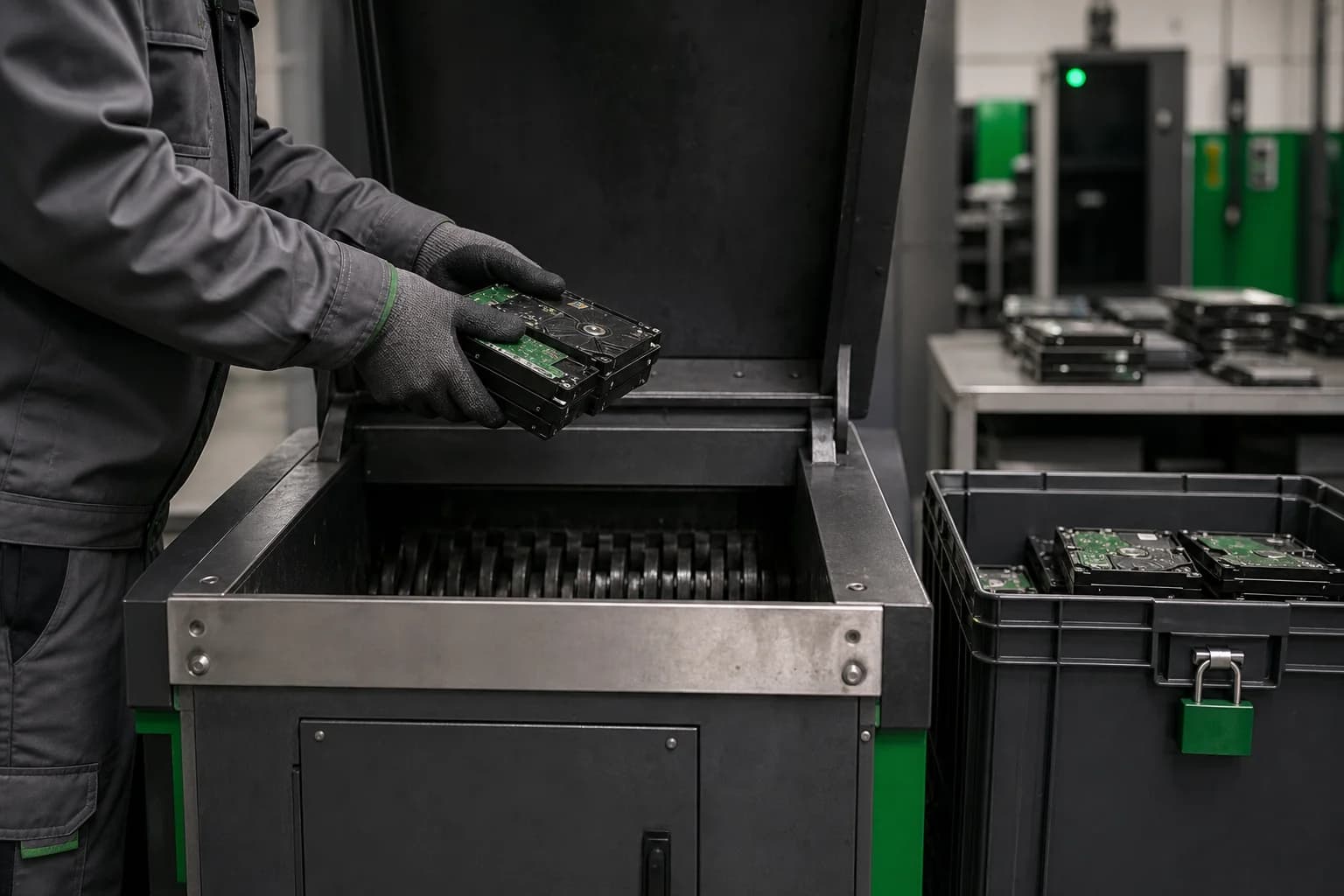
When it's time to retire hard drives, you have two main options: securely wipe them so they can be reused, or physically shred them so they can never be read again. Here's how to decide.
Data wiping (software erasure)
Wiping overwrites the drive following a standard like NIST 800-88, leaving a fully functional drive with no recoverable data. It's the right choice when a drive still has resale or redeployment value, because it preserves the hardware while eliminating the data risk.
Physical shredding
Shredding destroys the drive itself, rendering the data unrecoverable by any means. It's the highest-assurance option and is often required for the most sensitive data — or for drives that are damaged, failed, or have no resale value. It can be performed on-site, witnessed by your team.
How to choose
Match the method to your risk tolerance and the asset's value. Many organizations use both: wipe drives with resale value, shred everything else and anything covered by strict regulatory requirements.
- Choose wiping when the drive will be reused or resold
- Choose shredding for maximum assurance or end-of-life drives
- Either way, insist on a serialized Certificate of Destruction
Related service
Secure Data Destruction
Audit-ready erasure and physical destruction that eliminates breach liability.
Explore Data DestructionFAQs
Is shredding more secure than wiping?
Shredding offers the highest assurance because the media is physically destroyed. A properly verified NIST 800-88 wipe is also secure for reuse — the right choice depends on whether you want to preserve the hardware's value.
Can you shred drives at our location?
Yes. GreenTree offers witnessed on-site hard drive shredding as well as secure off-site destruction, both documented with a Certificate of Destruction.